123
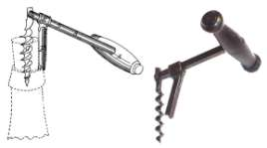
the rare corkscrew pictured below.
Clapp Patent No. 74,199, February 11, 1868
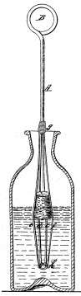
Button Patent
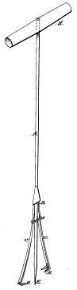
Gibson Patent
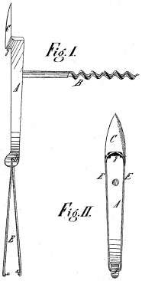
Harrigan Patent
Elijah Button approached the
―
claw
‖
opening a little differently. He places a spring
above the bound wires. The tool is pushed against the bottom of the bottle and that
expands the spring. He notes
―
... by their use that vexatious nuisance, a floating cork, is
readily abated.
‖
U. S. Patent No. 78,513 was granted June 2, 1868.
George Gibson added a straight pointed wire to presumably pierce the cork to the point
where the claws could grasp it. Unlike Clapp's patent, his
―
spear
‖
does not move up
and down. His suggestion that his tool could also be used as a bottle-washer has much
more credence with a cloth on the spear and held by the prongs. U. S. Patent No. 89,477
was granted April 27, 1869.
In U. S. Patent No. 117,278 issued July 25, 1871, John Harrigan combines a corkscrew,
can opener, and cork-drawer. His
―
tongs with fangs
‖
store in the handle when not in
use. They are not designed to remove a floating cork, rather they grasp a cork when the
bottle is turned upside down and the cork falls down into the throat of the neck.