122
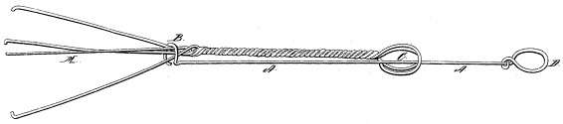
In C. Rosenberry's U. S. Patent No. 58,889 of October 16, 1866 he writes
―
The object of
this invention is to produce a device by means of which corks could be extracted from
bottles and other vessels conveniently, even if those vessels contain some liquid.
‖
Rosenberry of Chicago twists four wires together forming a claw on the end of each. By
passing the wires through a sliding ring, the claw can be closed to enter the bottle and
opened to grip the cork.
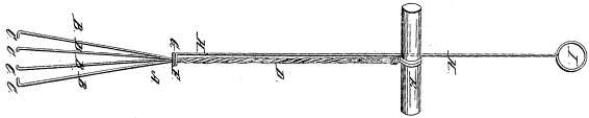
One week after Rosenberry's patent, J. T. Ashley of Brooklyn, New York, was granted
U. S. Patent No. 58,969 for a remarkably similar device working in the same manner as
Rosenberry's but having a wooden
―
T
‖
handle.
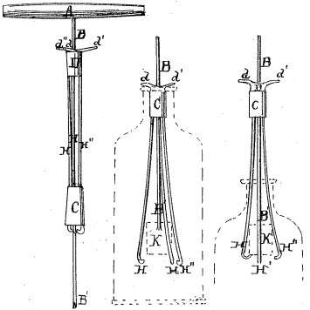
Seth Clapp came up with a little bit more
complicated device in his
―
Improved
Cork-Pull
‖
U. S. Patent No. 78,485 of
January 21, 1868. He points out that he
has combined
―
with a number of
grappling-prongs a central spear, said
spear serving to pierce the cork and to
draw it up between the prongs
‖
. He
likens the possibilities of the point to an
arrow-head or eel-spear. Once the lucky
fisherman impales the top of the cork
with the spear, it can be drawn up
between the prongs and then extracted.
Avid corkscrew collectors may recognize
the name Seth Clapp as the inventor of