180
pair of buckles were daily completed. His private dwelling-house was at the corner of
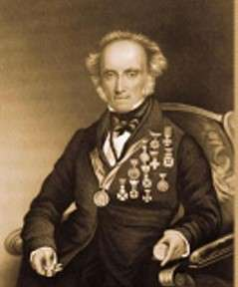
Colmore Row and Church Street, where his son Edward was born in 1769, and
afterwards took up his residence.
At the age of sixteen Edward Thomason was articled
to the famed Matthew Boulton of Soho. The extent of
Boutlon's manufactory and the diversified machinery
used for the furtherance of the manufacture of the
numerous and varied articles made on his premises,
excelled all others of a like description in Europe.
This scientific school produced in Thomason a
versatility of taste for mechanism, and a turn for art
and science. On the other hand, it seems to have
given him an ambitious feeling, far beyond the means
he possessed on coming of age to indulge in.
When twenty-one years of age, he began to
manufacture on his own account; first establishing
the trade of gilt and silver buttons, of the finest class;
he then added to it the trade of gilt and gold jewelry;
to those was annexed a department for the making of medals, tokens, and coins, of
gold, silver bronze &c., as well as works in bronze, and fine cut glass, &c. Lastly, he
subjoined a manufactory for silver and gold plate, and silver-mounted plated wares of
the highest class of workmanship. These trades occupied sixty or seventy rooms,
including several devoted to exhibition.
But the line of business in which Mr. Edward Thomason was specially engaged for forty
years, was confined to the highest class in the metallic arts. In 1830 he completed the
laborious work of sixty large medals on the Bible; in which the most prominent events
in Sacred History our concisely told. The origin of these medals arose from the visit to
Birmingham of a gentleman connected with the Austrian Court, and who hitherto had
never heard of Birmingham. Mr. Thomason was forcibly struck with this circumstance,
and determined to endeavour to make the town known to all Monarchs and Courts in
the civilized world; - hence the manufacture of these medals at a great cost, which were
forwarded to all the Sovereigns of Europe. The presents Mr. Thomason received in
return, which in some case were most princely, are certainly blazoned forth too
conspicuously in his autobiography [Sir Edward Thomason's
Memoirs during Half a
Century
was published in 1845 by Longman, Brown, Green, and Longmans, London]
(but in fairness, it should be explained, that this so-called autobiography was left
unfinished by the author, on account of the failure of his health, and therefore he cannot
be considered responsible for the whole of its contents; which indeed makes him appear
vain of success, and more earnest in seeking honours than in promotion of the Arts and
Manufactures).