109
Prohibition and Corkscrews
The18th amendment to the United States Constitution
became law January 17, 1920. It became known as the
―
National Prohibition Act
‖
.
Section 1. After one year from the ratification of
this article the manufacture, sale, or transportation
of intoxicating liquors within, the importation
thereof into, or the exportation thereof from the
United States and all territory subject to the
jurisdiction thereof for beverage purposes is
hereby prohibited.
Section 2. The Congress and the several states
shall have concurrent power to enforce this article
by appropriate legislation.
Section 3. This article shall be inoperative unless it
shall have been ratified as an amendment to the
Constitution by the legislatures of the several
states, as provided in the Constitution, within
seven years from the date of the submission
hereof to the states by the Congress.
The 18th Amendment was repealed and alcohol began to flow again on April 7, 1933.
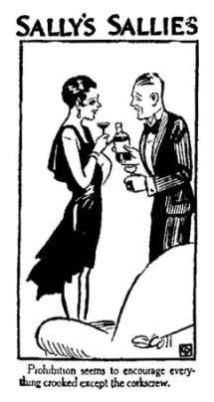
During those years, numerous references to corkscrews appeared in the media.
Corkscrews as Hair Pins
From the January 31, 1919
Oakland Tribune
(California): The
Kansas City Star
suggests
that corkscrews be straightened out and used for hair pins.
―
Nonsense ... Better save
them for posterity, to be exhibited 100 years hence as relics of an almost unforgotten
day when great great grandfather used to operate one.
―
Corkscrew to Button Hooks
From the February 10, 1919 edition of the Alton, Illinois
Evening Telegraph
:
―
It is said
that after July 1, all corkscrews in the country will be converted into shoe buttoners, and
shoe buttoners will have about as little work to do as corkscrews after awhile,
apparently.‖
Corkscrews to Gimlets
From the February 22, 1991 edition of the Woodland, California
Daily Democrat
:
―
The
cork screw manufacturer has been hit hard by the National Prohibition amendment,
unless cork screws
can be converted into gimlets.‖