58
National Arbor Day
In 1854, J. Sterling Morton and his wife left their home in Detroit, Michigan and
headed West. They stopped in Nebraska, found some land, and started planting
trees. Shortly after they settled, Morton became editor of Nebraska
‟
s first
newspaper and used it as a forum for dispensing agricultural information. Trees
were planted everywhere.
On January 4, 1872, Morton proposed a tree-planting holiday to be called
“
Arbor
Day
”
at a meeting of the State Board of Agriculture. The date was set for April
10, 1872. It was estimated that more than one million trees were planted in
Nebraska on the first Arbor Day. In 1885 Nebraska established Morton
‟
s
birthday, April 22, as a legal holiday.
The movement grew and other states passed legislation to observe Arbor Day.
Today the most common date for the state observances is the last Friday in April,
and several U.S. presidents have proclaimed a National Arbor Day on that date.
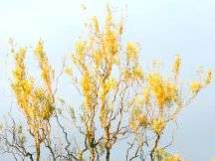
The
“
Corkscrew Willow
”
was introduced into
the United States in 1923 from China. It is a
derivative of the Hankow Willow (
Salix
matsudana
), a tree dedicated to the great Japanese
botanist Sadahisa Matsudo who cataloged the
plants of China. The Corkscrew Willow (
Salix
matsudana cv. Tortuosa
) is filled with many twists
as the name implies - even the leaves are curled
and twisted. The tree normally grows to about
30 feet, and occasionally up to 50 feet high.